Blog
Insights & Guides
Tips, format explainers, and how-to guides to help you work with files faster.
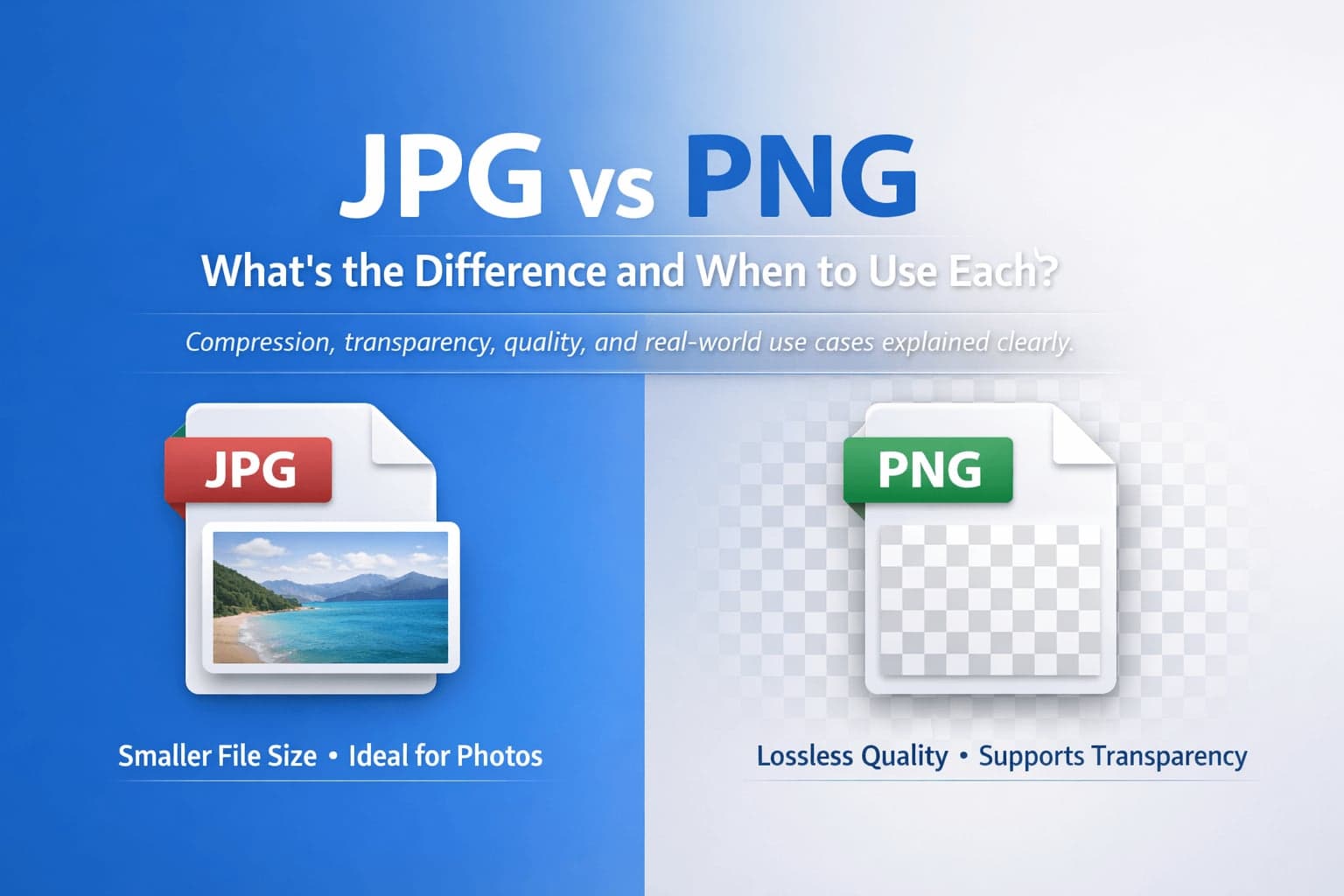
JPG vs PNG: What's the Difference and When to Use Each?
JPG and PNG look similar at first glance, but they are built on different principles. Understanding the difference helps you choose the right format — whether you are optimizing a website, preparing marketing materials, or converting files.
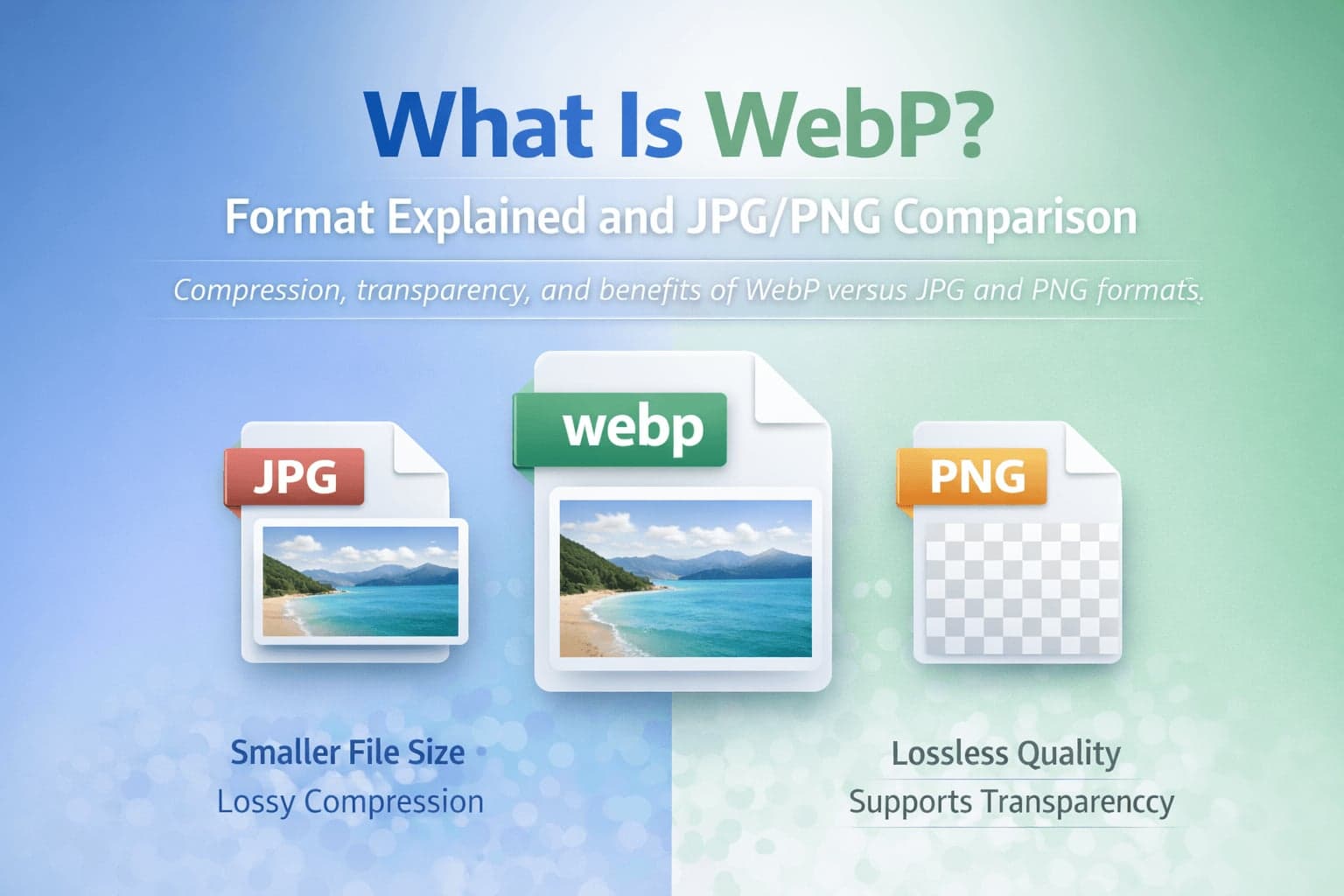
What Is WebP? Format Explained and JPG Comparison
WebP is a modern image format designed to make websites faster without sacrificing visual quality. Understanding how it compares to JPG and PNG helps you decide when conversion makes sense.
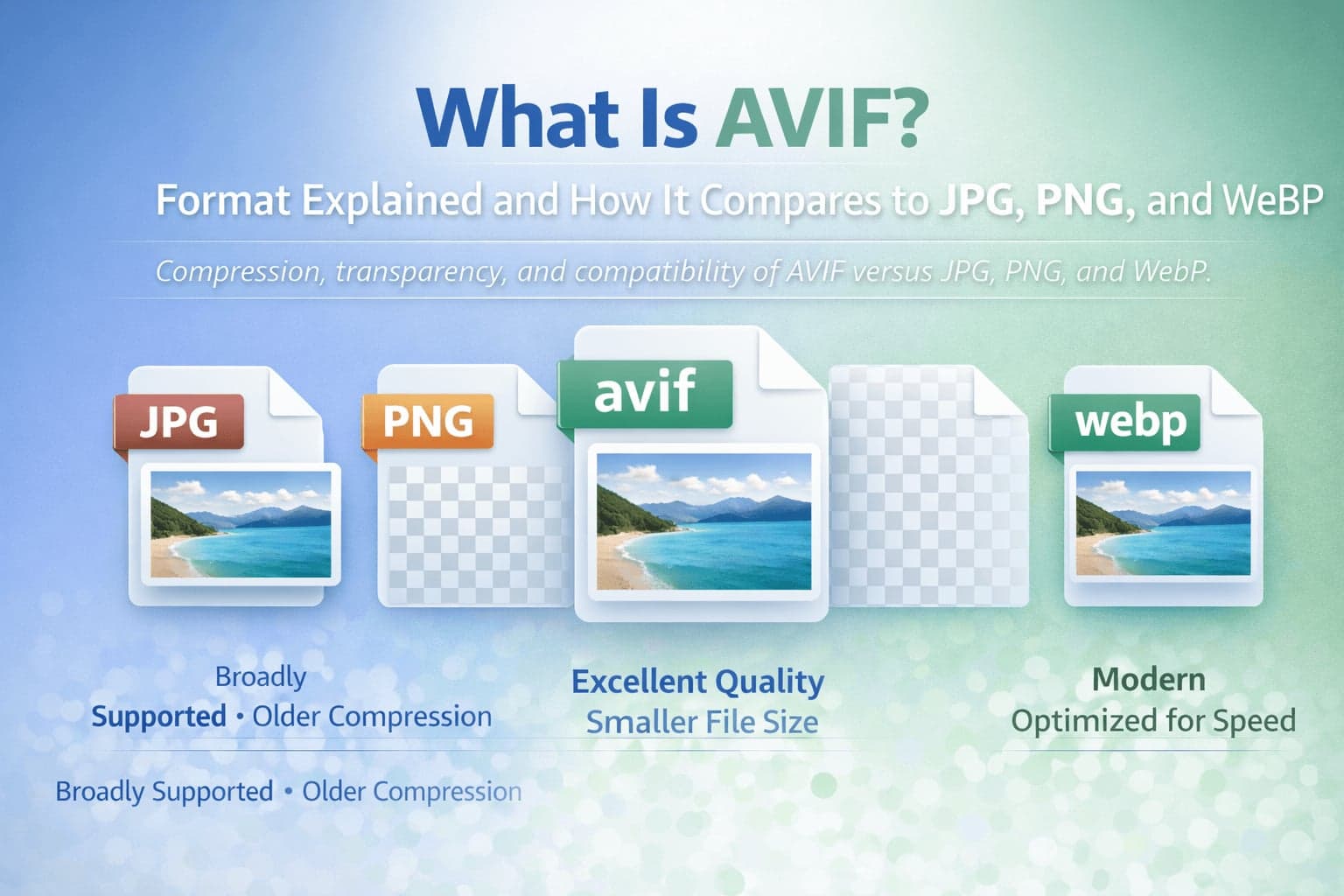
What Is AVIF? Format Explained and How It Compares to JPG, PNG, and WebP
AVIF is one of the newest mainstream image formats designed for smaller file sizes without sacrificing quality. Understanding how it compares to JPG, PNG, and WebP helps you choose the right format and convert confidently.
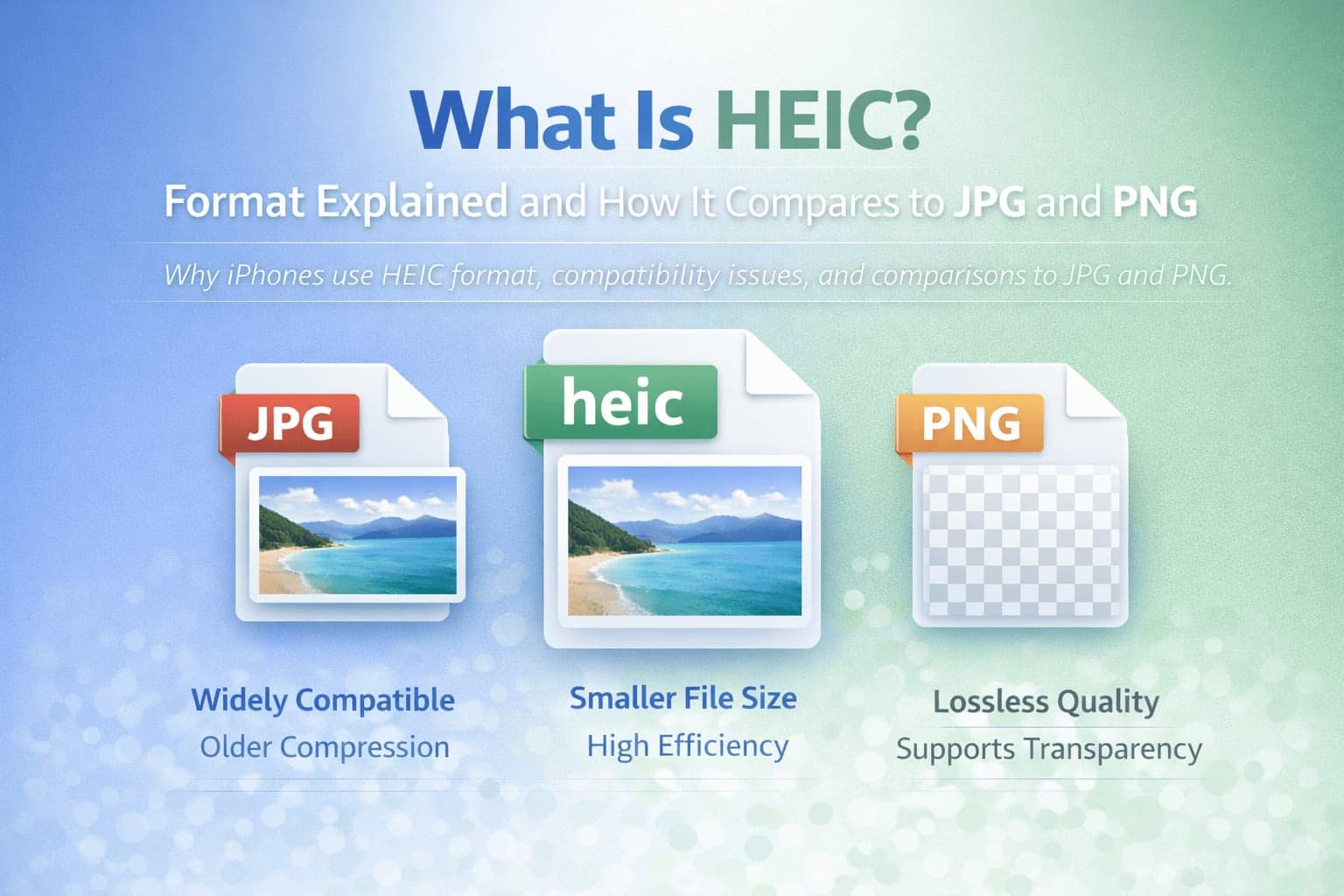
What Is HEIC? Format Explained and How It Compares to JPG and PNG
HEIC is the format iPhones use to store high-quality photos at smaller file sizes — but compatibility is still a real-world concern. Understanding when to keep HEIC and when to convert helps you avoid friction in everyday workflows.
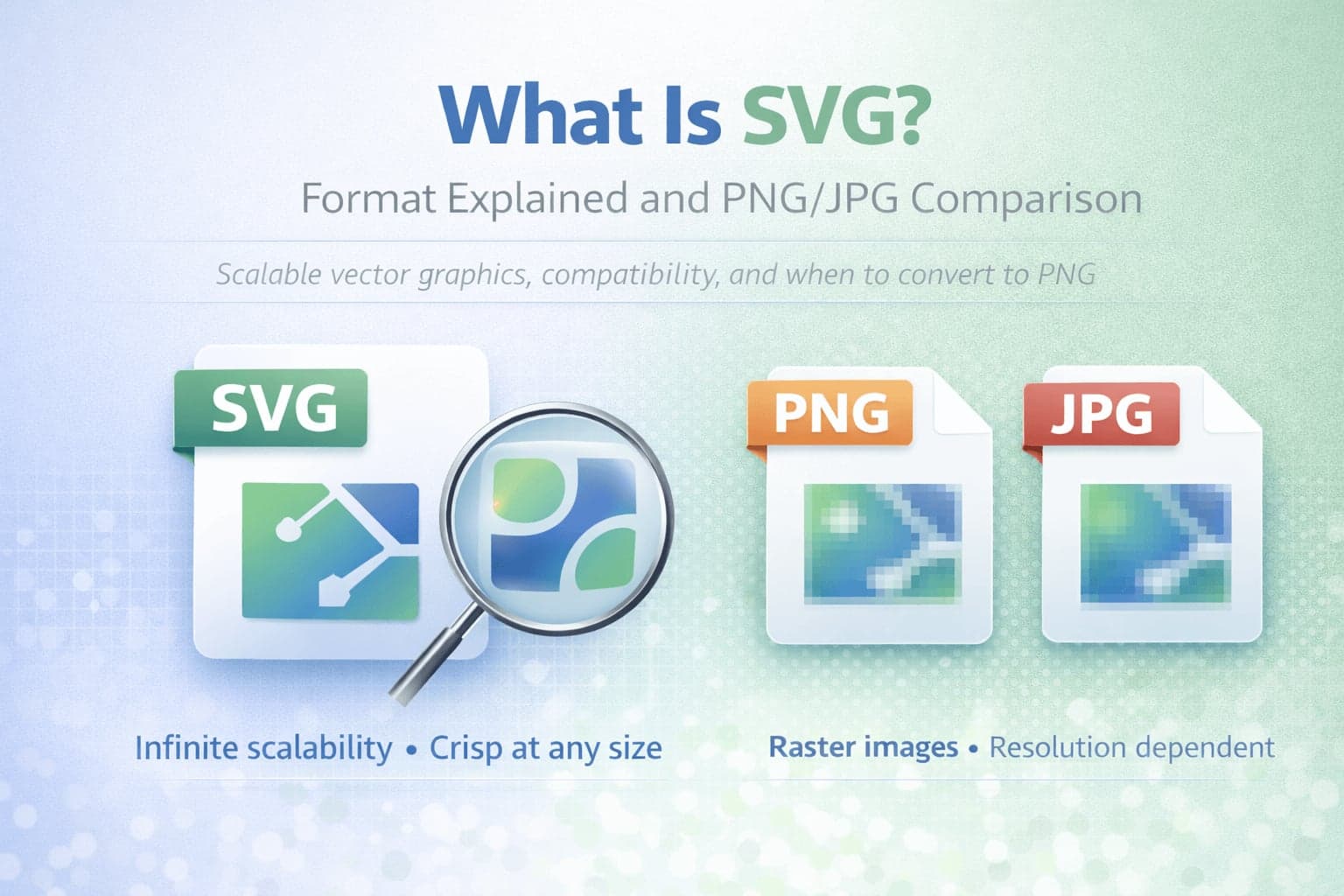
What Is an SVG File? Format Explained and How It Compares to PNG and JPG
SVG is the format behind every sharp logo and icon on the modern web. Unlike JPG and PNG, it scales to any size without losing clarity — making it essential for logos, icons, and responsive design.
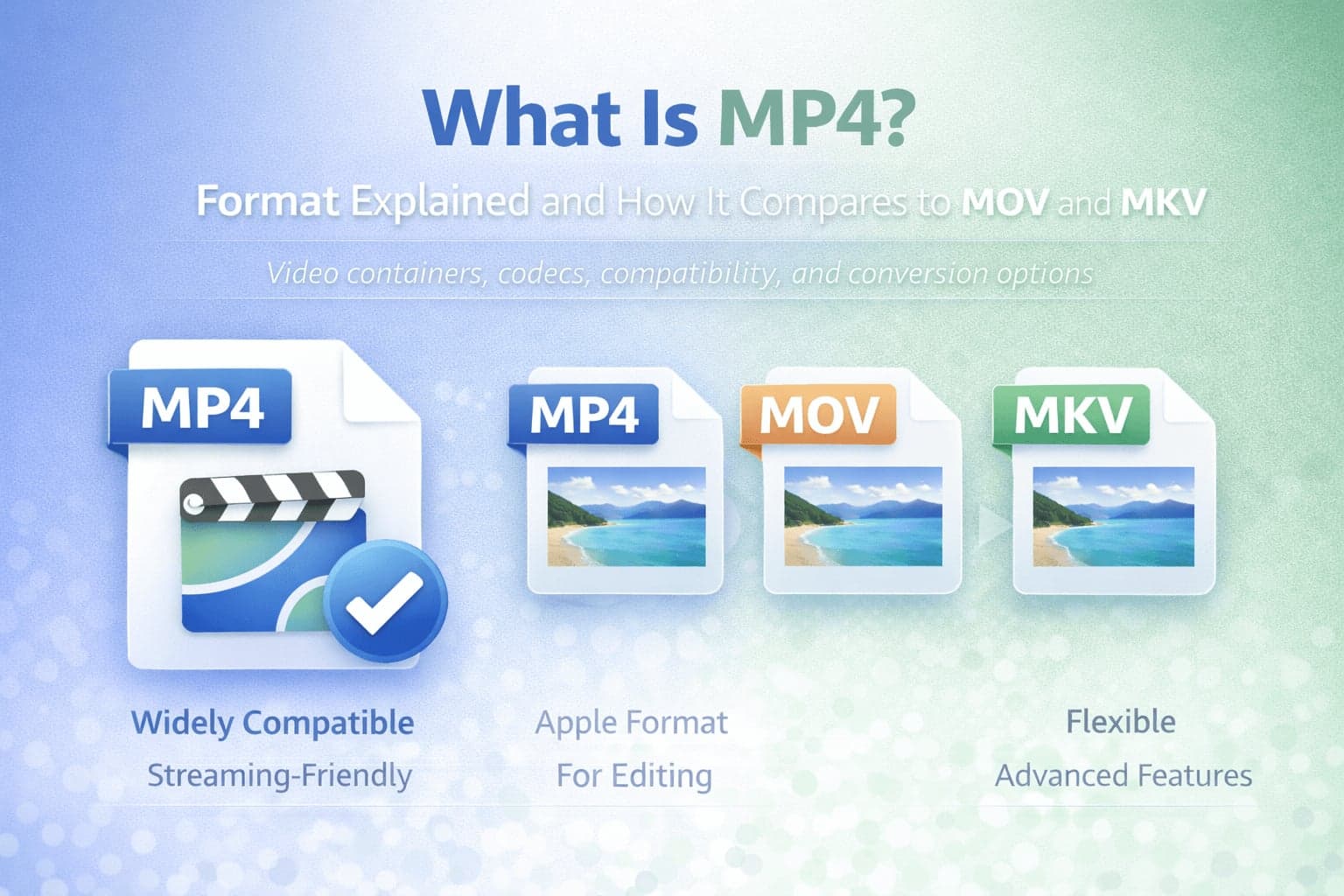
What Is MP4? Format Explained and How It Compares to MOV and MKV
MP4 is the dominant video format for streaming, sharing, and cross-device playback. Understanding how it differs from MOV and MKV helps you choose the right format and convert when needed.
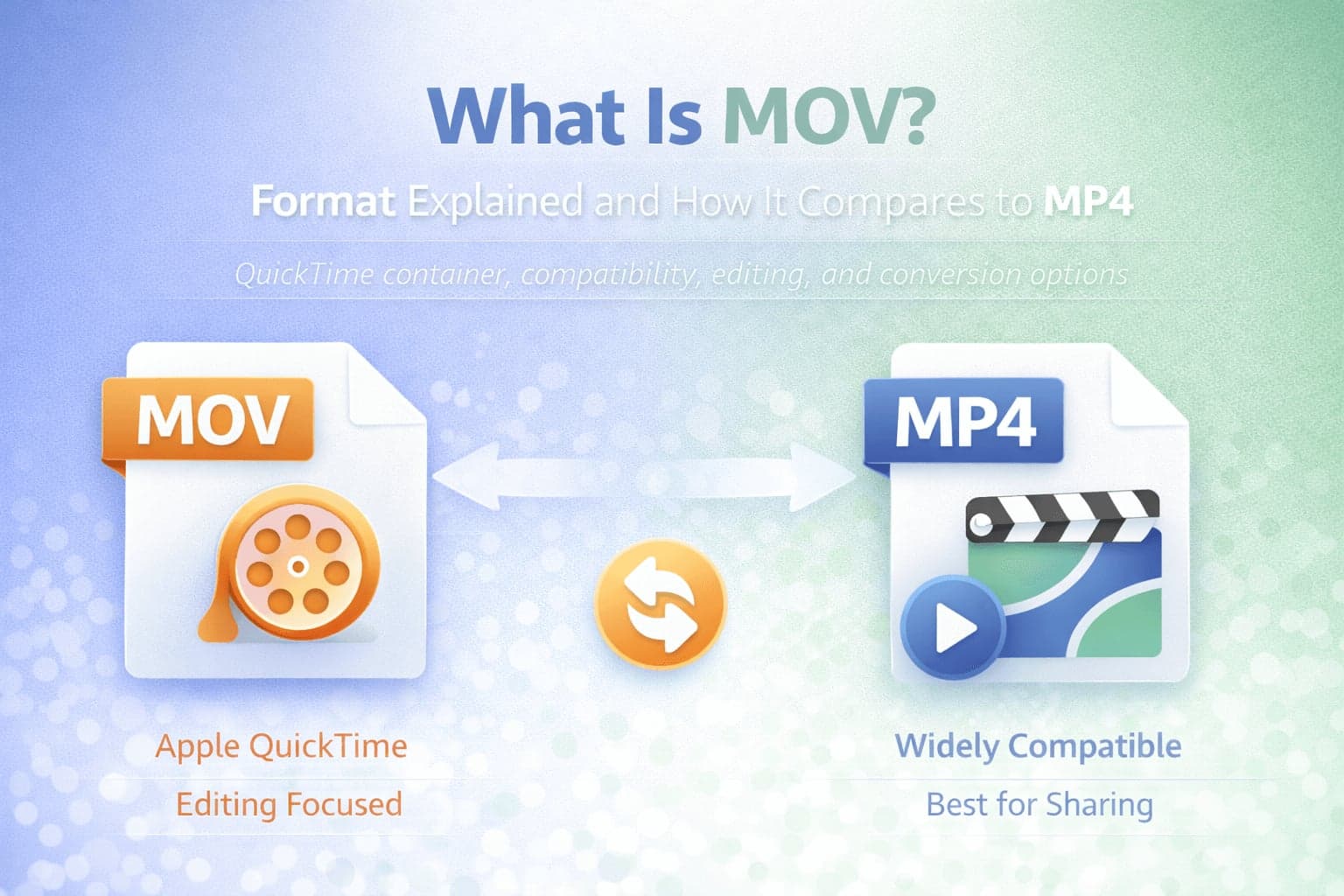
What Is MOV? Format Explained and How It Compares to MP4
MOV is Apple's QuickTime container format, widely used in editing and production workflows. Understanding how it compares to MP4 helps you decide when to keep MOV and when to convert for broader compatibility.
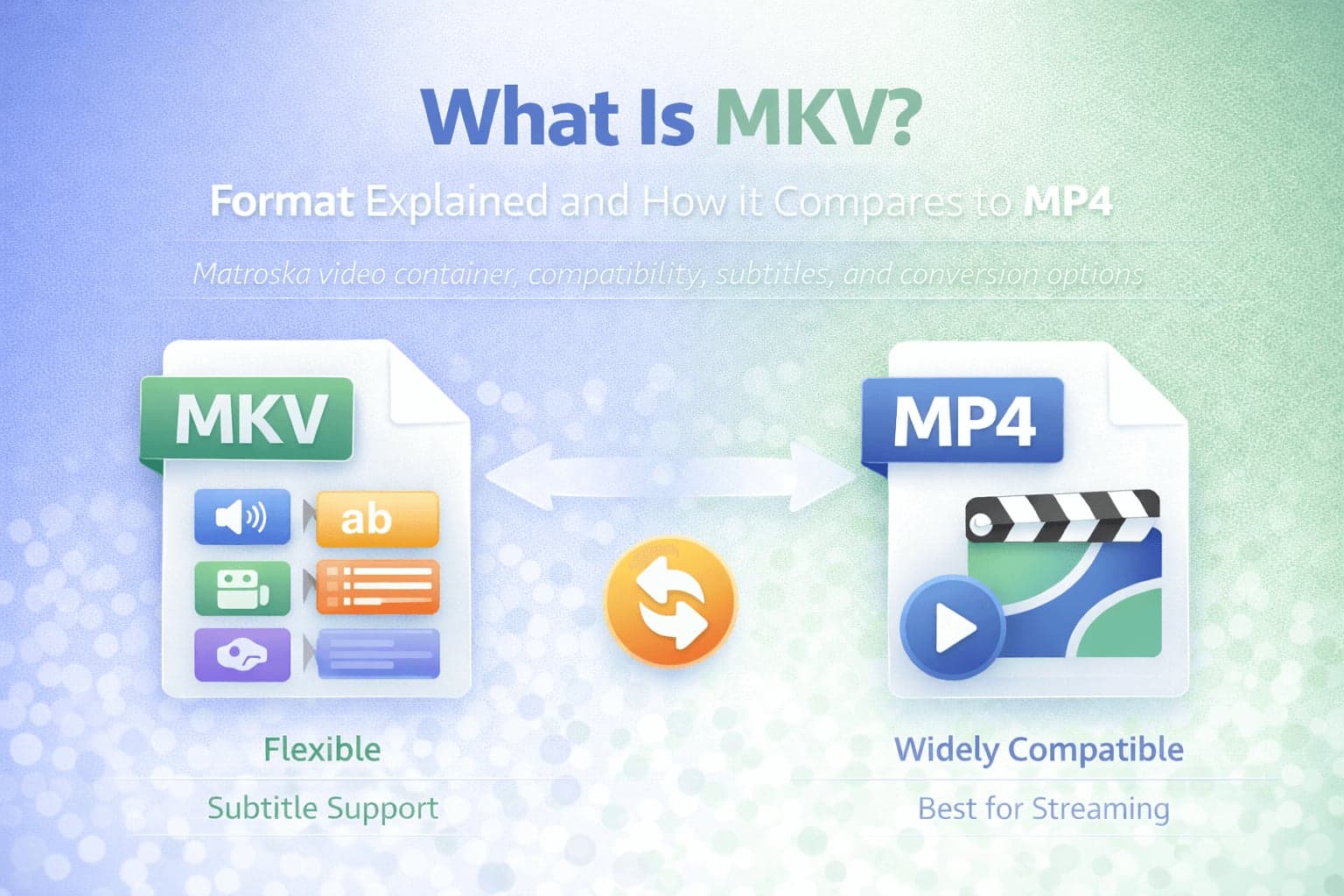
What Is MKV? Format Explained and How It Compares to MP4
MKV is the go-to format for advanced media packaging — multiple audio tracks, subtitles, and chapter markers in one file. Understanding how it differs from MP4 helps you decide when to keep MKV and when to convert.
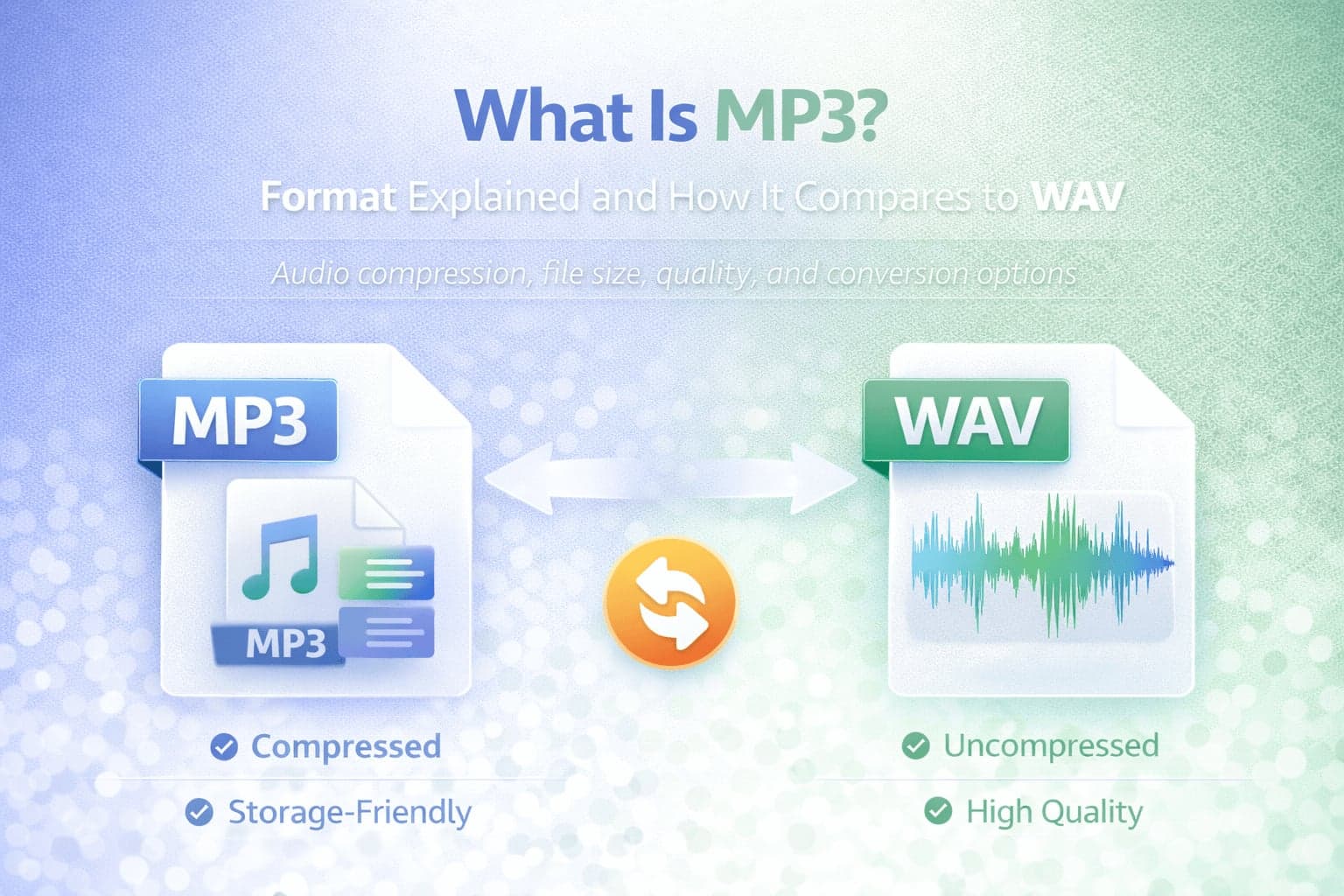
What Is MP3? Format Explained and How It Compares to WAV
MP3 is one of the most recognized audio formats in the world. It balances file size, compatibility, and acceptable sound quality. Understanding how MP3 works and how it compares to WAV helps clarify why some audio files are much smaller than others and why conversion between formats is common.
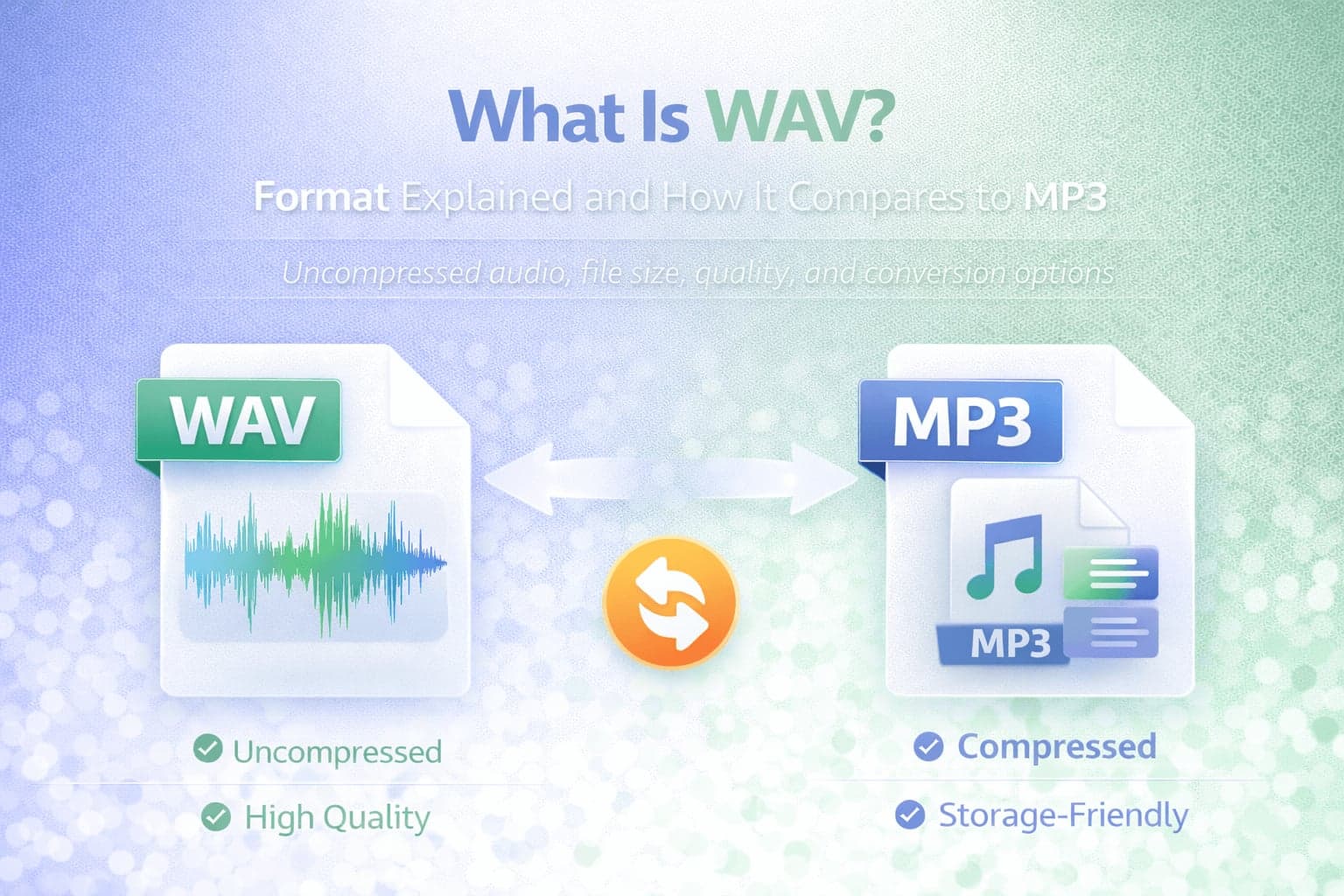
What Is WAV? Format Explained and How It Compares to MP3
WAV is one of the most widely recognized audio formats in professional recording and editing environments. Unlike MP3, which focuses on compression, WAV is primarily associated with preserving full audio detail. Understanding what WAV is and how it differs from MP3 helps clarify why some audio files are dramatically larger and why certain formats are preferred in production workflows.
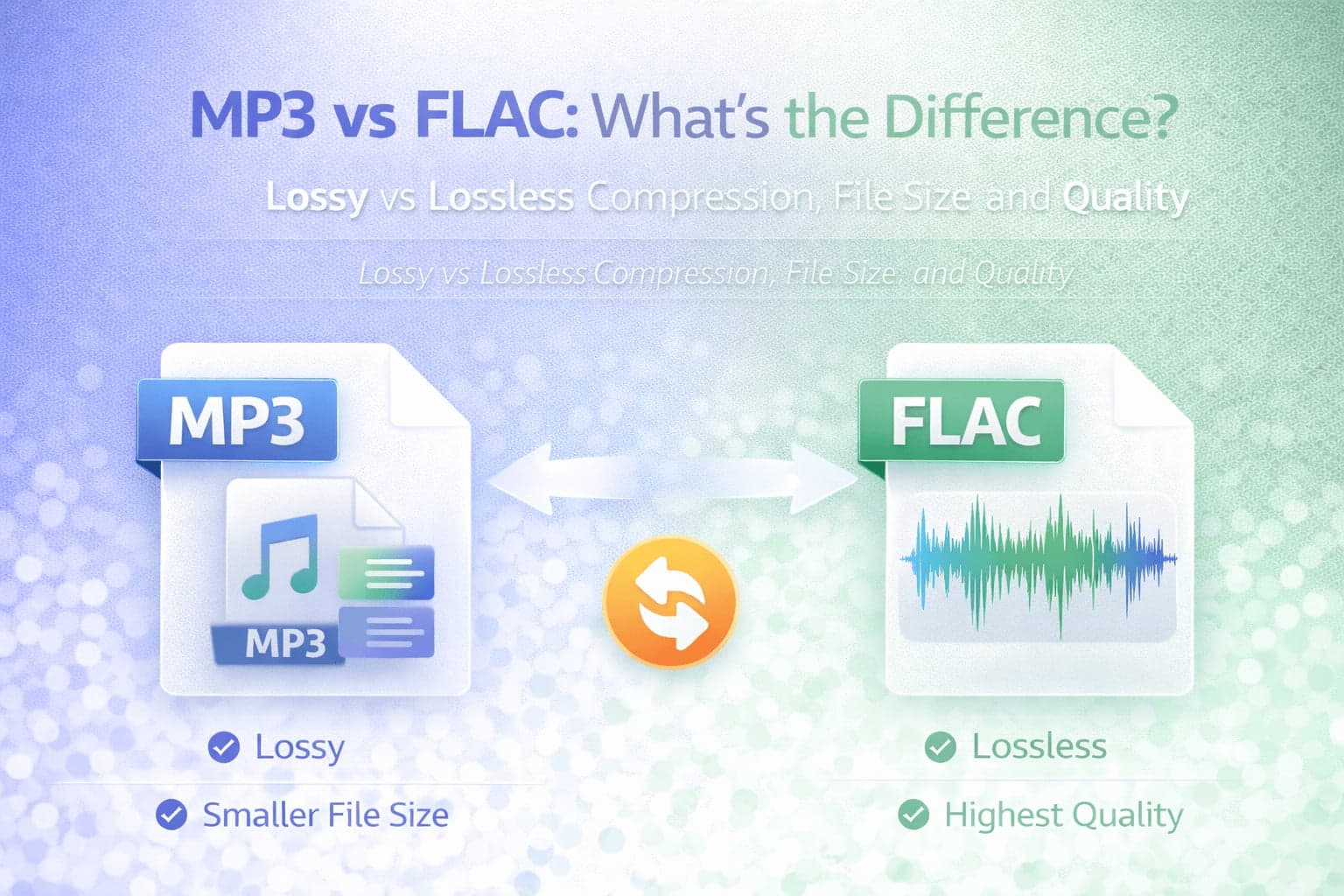
MP3 vs FLAC: What's the Difference?
MP3 and FLAC represent two opposite approaches to audio compression. MP3 is widely known for its compact size and universal compatibility. FLAC is associated with high-quality, lossless audio. Understanding the difference requires understanding how compression works — and why it matters for quality, storage, and everyday use.
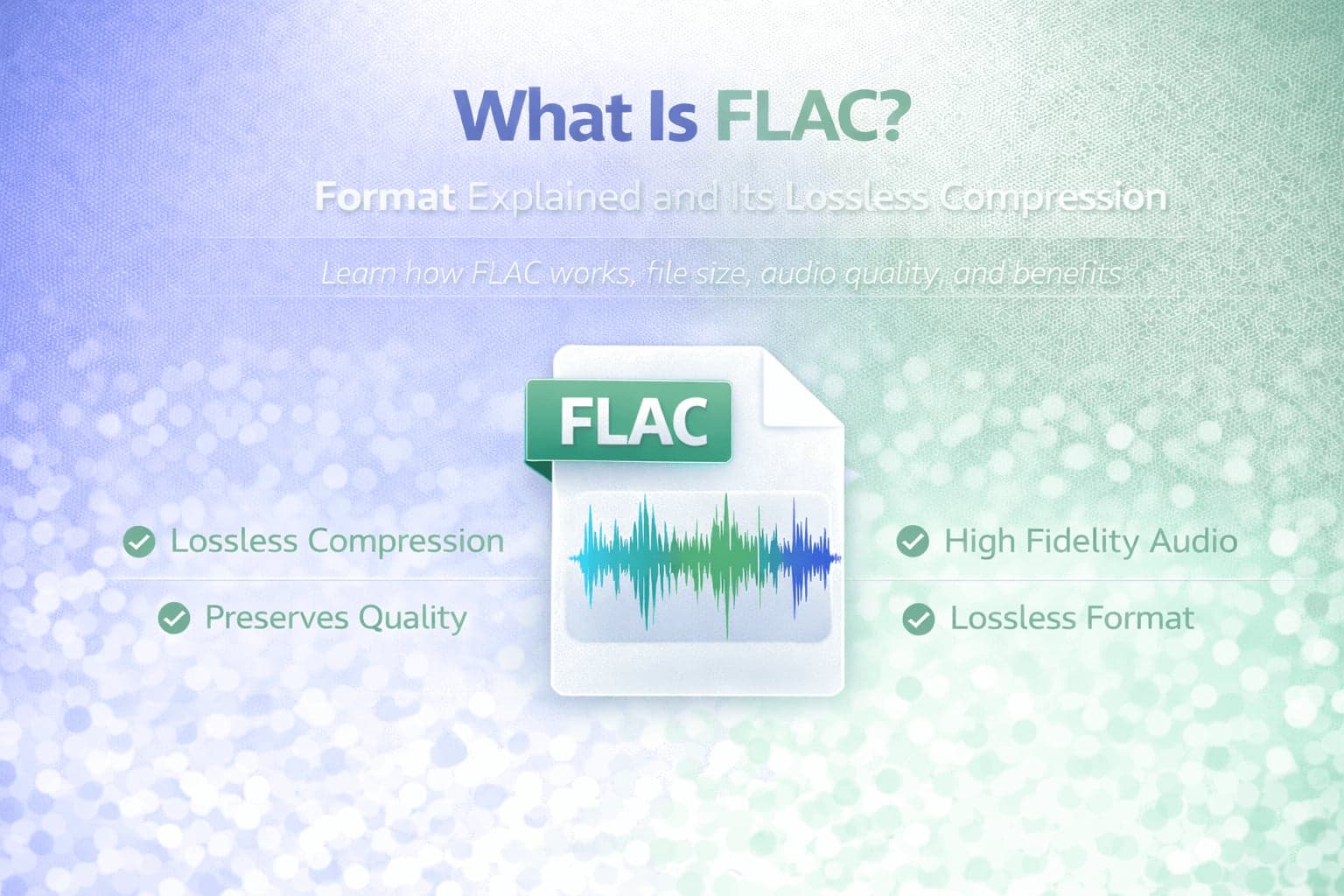
What Is FLAC? Format Explained
FLAC is a digital audio format designed to preserve original sound quality while reducing file size through efficient compression. Unlike MP3, which permanently removes parts of the audio signal, FLAC uses lossless compression — meaning the original audio data is reconstructed perfectly on playback, without any loss of information.