Blog
Insights & Guides
Tips, format explainers, and how-to guides to help you work with files faster.
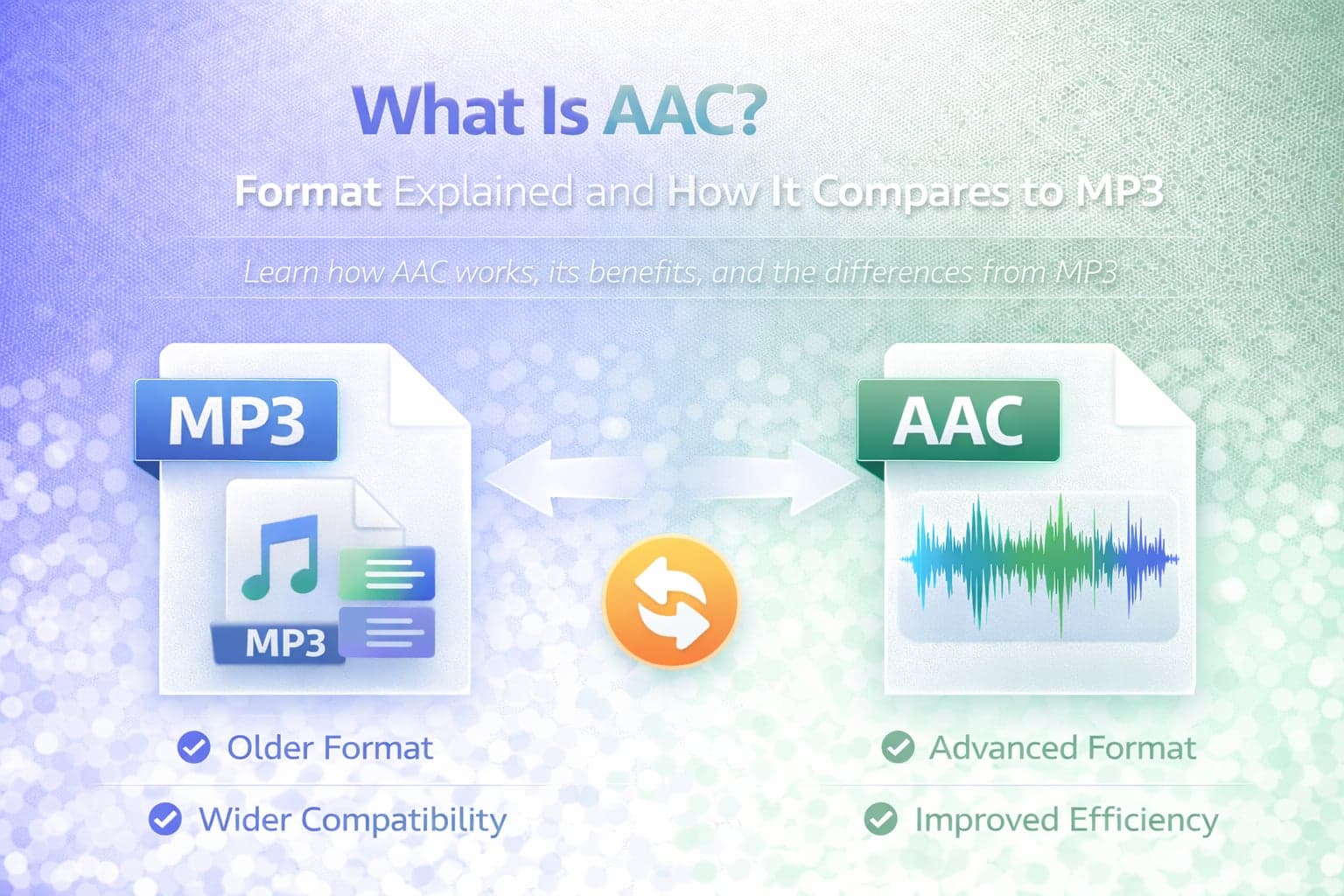
What Is AAC? Format Explained and How It Compares to MP3
AAC is a digital audio format designed to deliver high sound quality at relatively low bitrates. Developed as a successor to MP3, it is widely used in streaming platforms, mobile devices, and online distribution. Understanding how AAC compares to MP3 helps clarify why certain platforms prefer it and when conversion may be necessary.
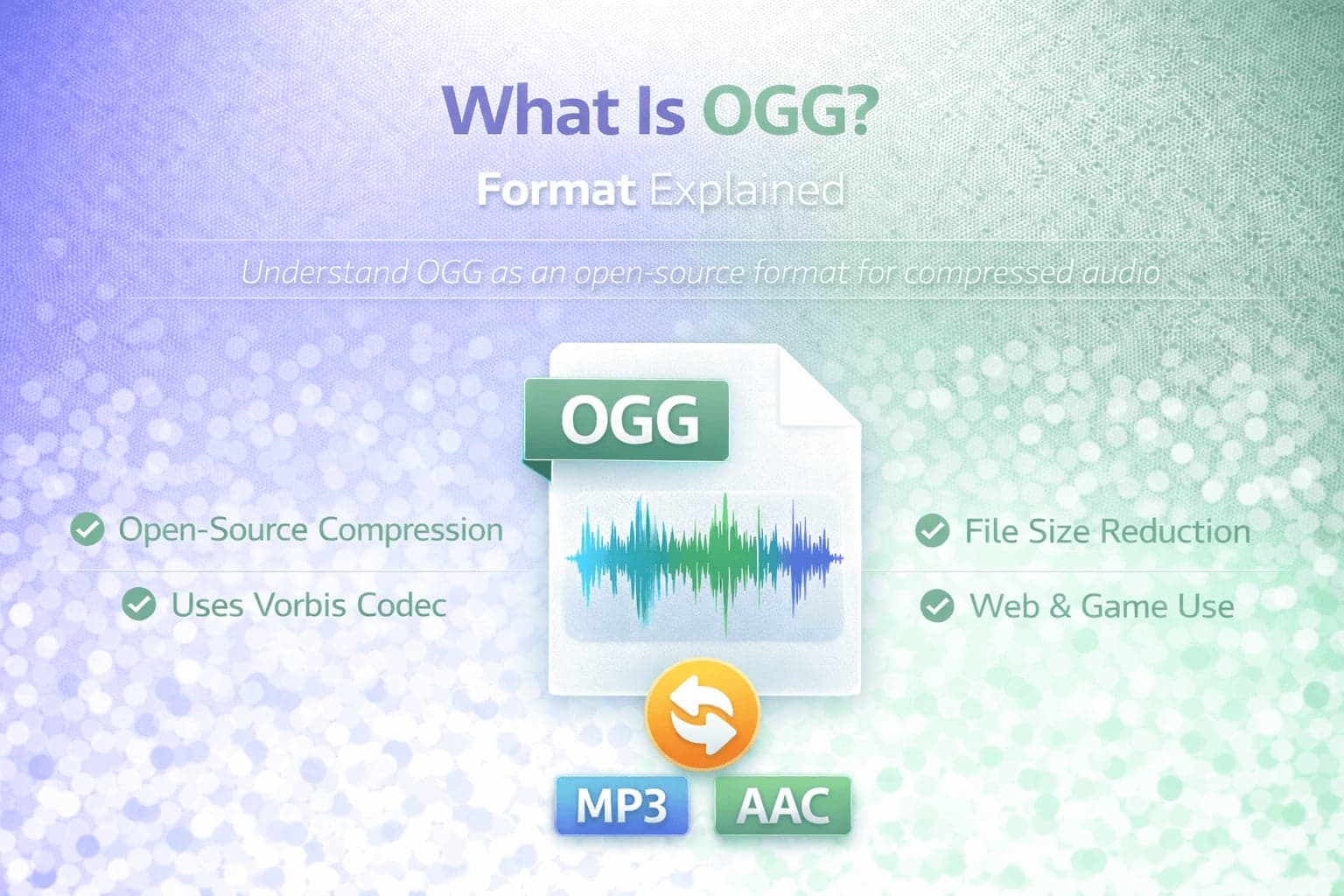
What Is OGG? Format Explained
OGG is a multimedia container format commonly associated with efficient, open-source audio compression. Unlike MP3 and AAC, which were developed within proprietary frameworks, OGG was created as part of an open standard — designed to provide high-quality audio compression without licensing restrictions.
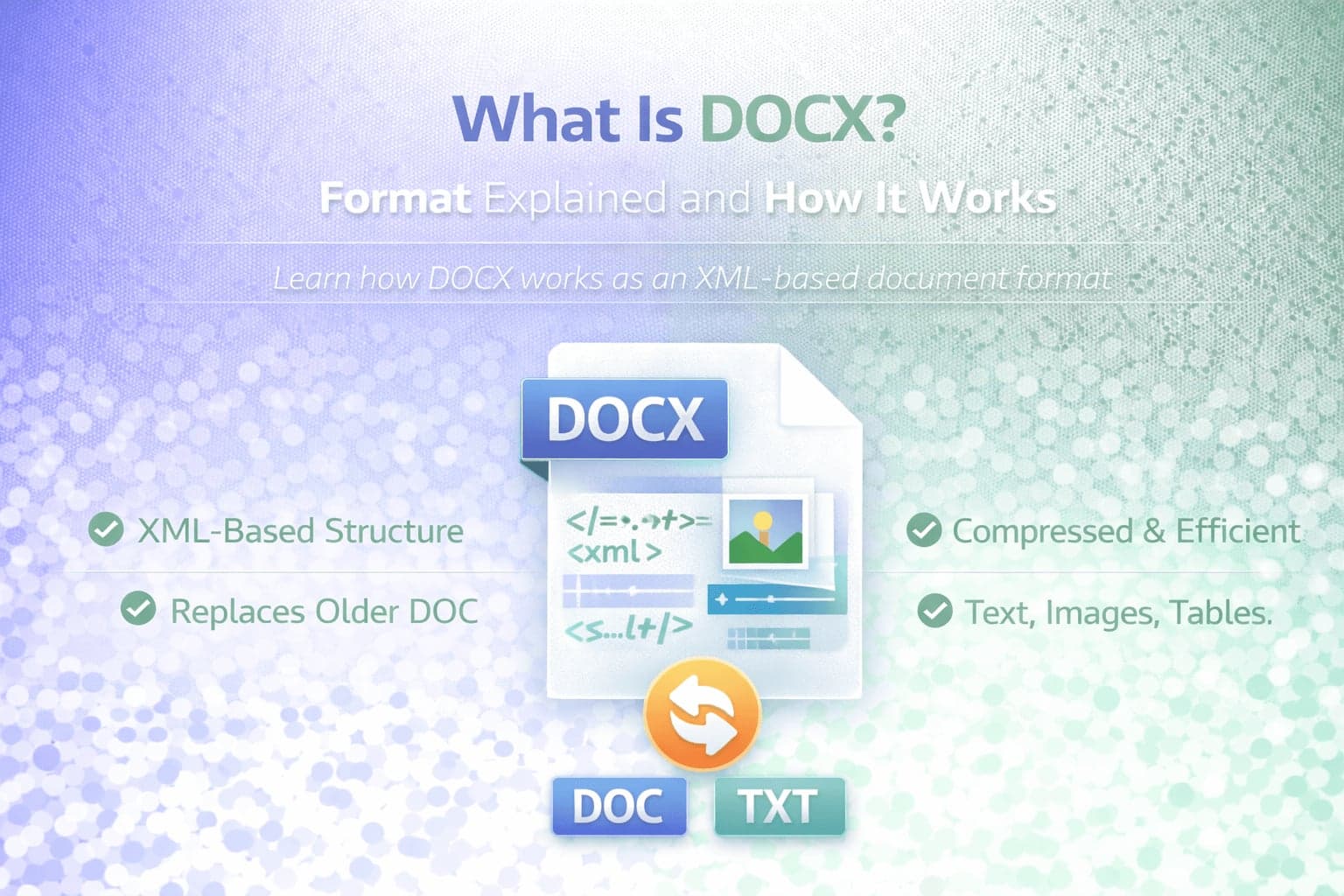
What Is DOCX? Format Explained and How It Works
DOCX is one of the most widely used document file formats in the world. Introduced with Microsoft Word 2007, it replaced the older DOC format with an XML-based, compressed structure — bringing improvements in file size, compatibility, and data organisation.
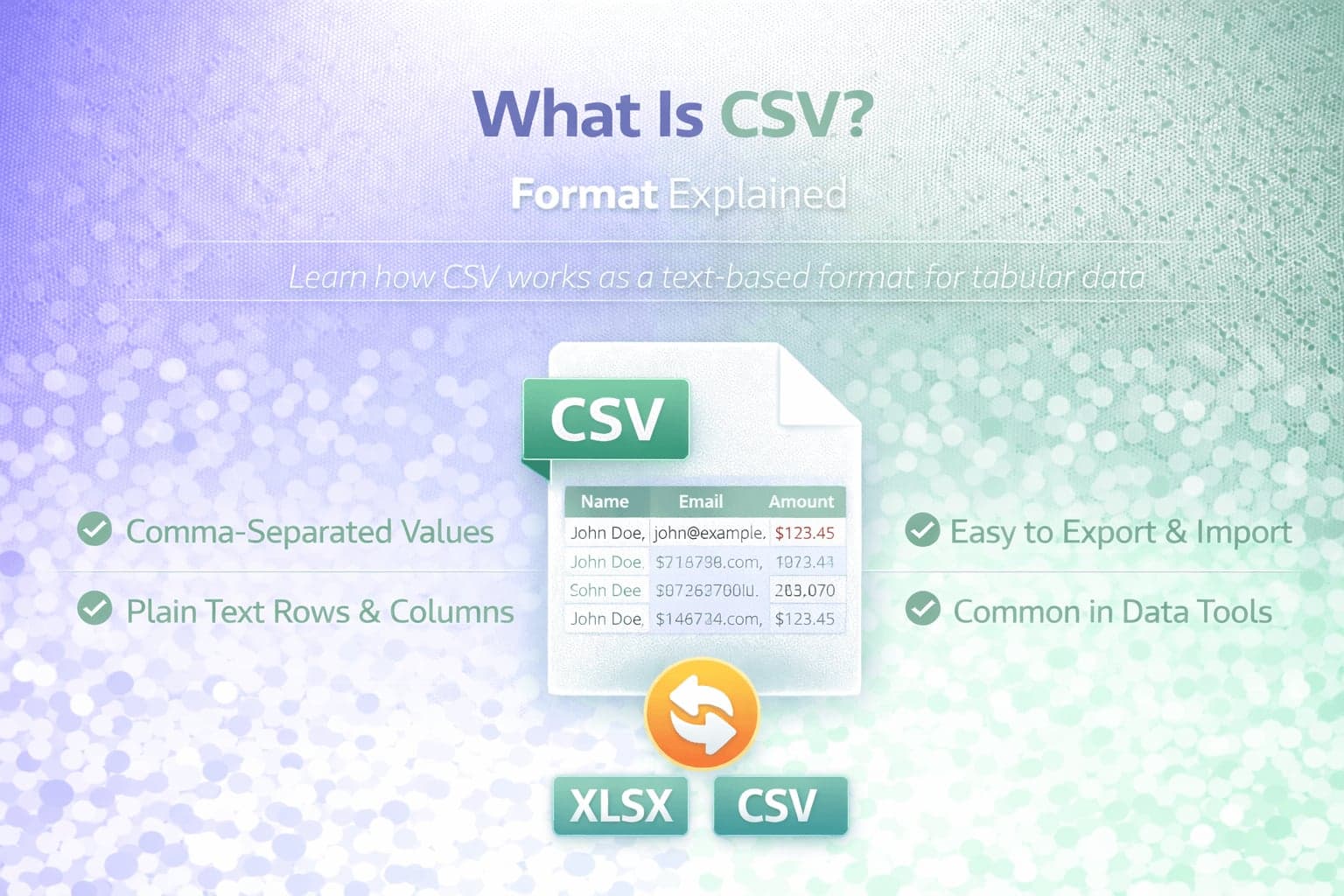
What Is CSV? Format Explained
CSV is one of the most common file formats used to store and transfer tabular data. Used everywhere from CRM exports to ecommerce reports, CSV is lightweight and universally supported. Understanding how it works helps prevent common issues like broken columns, wrong separators, and corrupted special characters.
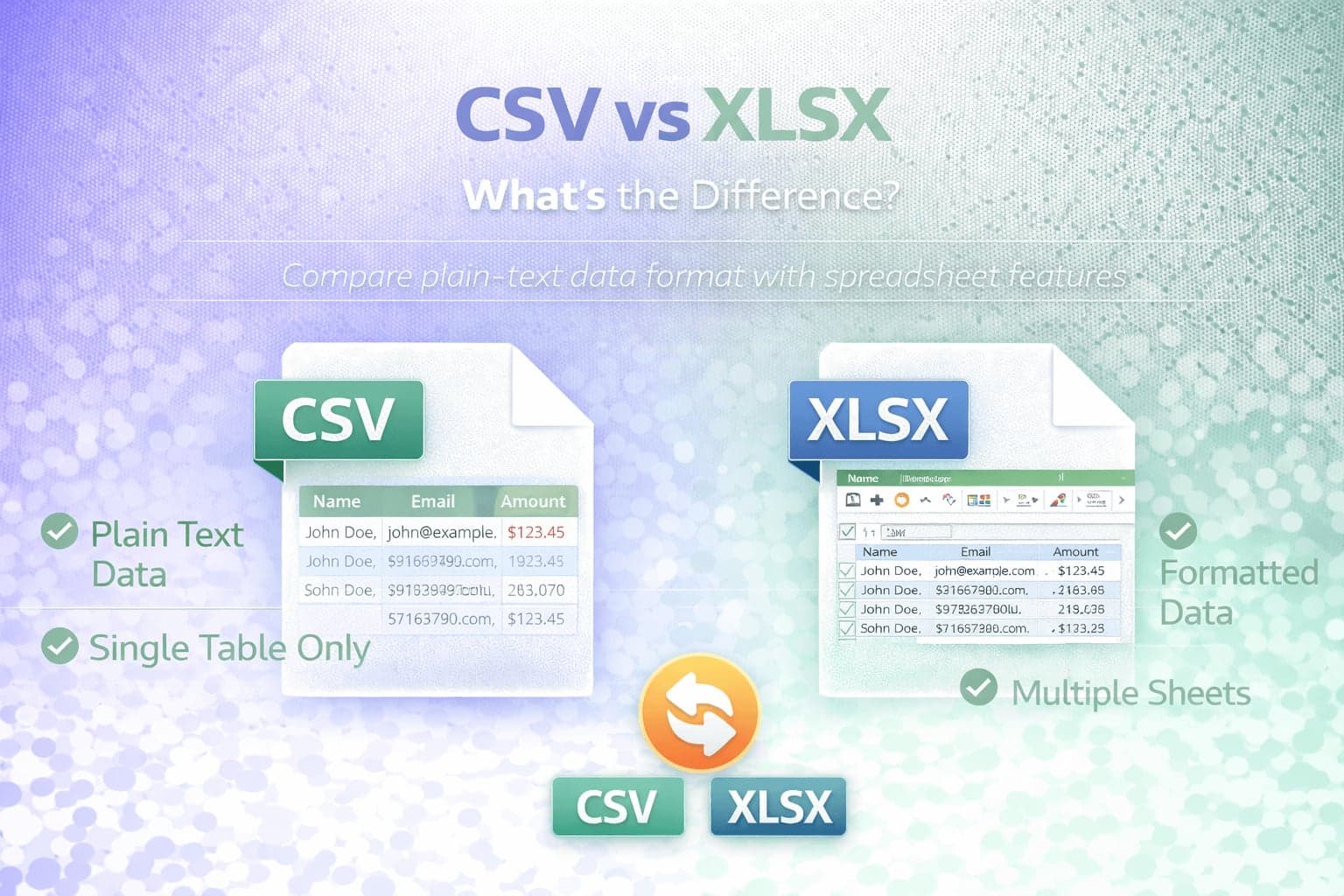
CSV vs XLSX: What's the Difference?
CSV and XLSX are two of the most commonly used formats for storing tabular data. Although both can open in spreadsheet programs and display rows and columns, their structure, capabilities, and ideal use cases are fundamentally different — and mixing them up can lead to formatting loss, broken imports, and missing sheets.
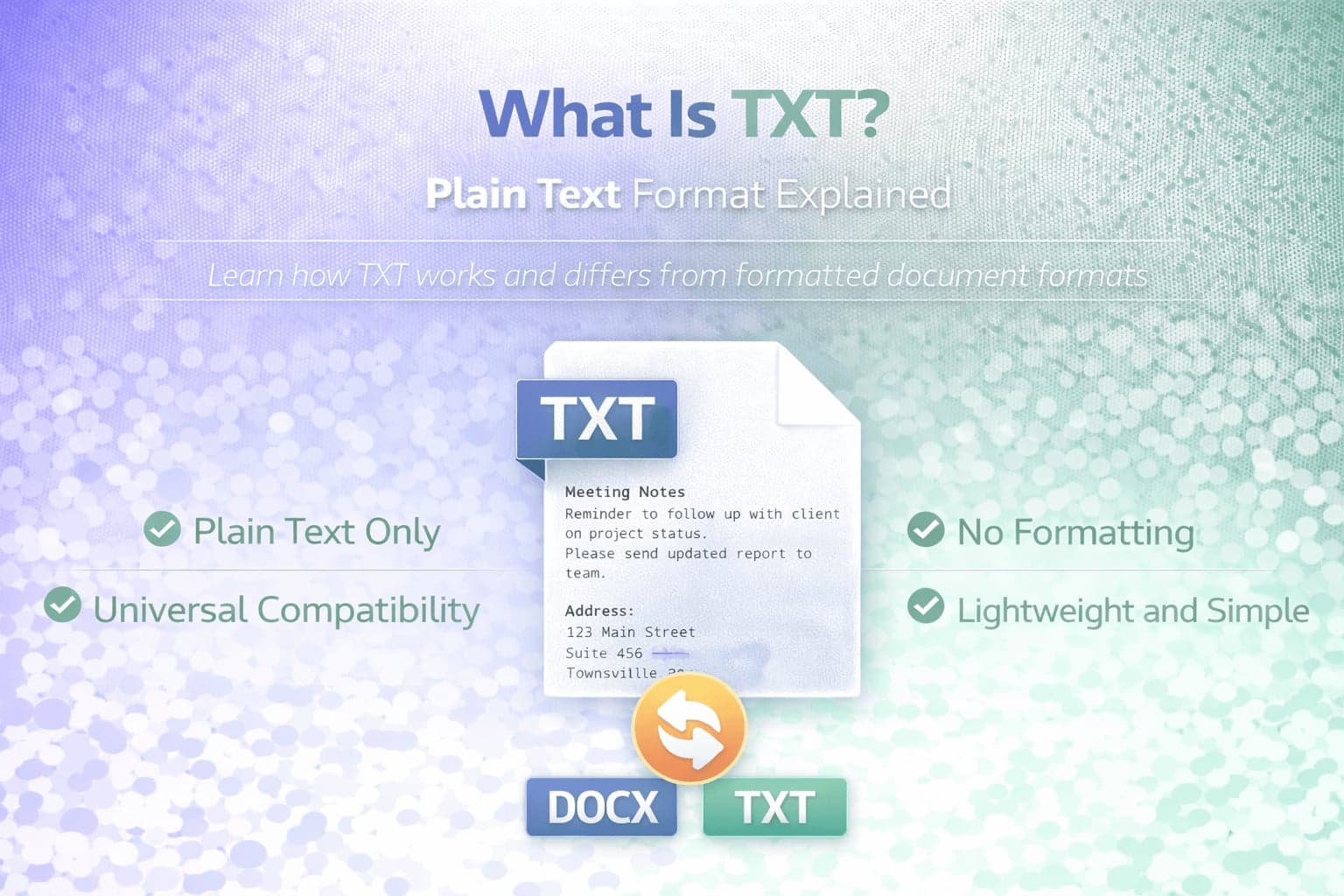
What Is TXT? Plain Text Format Explained
TXT is one of the simplest and most universal file formats in computing. It stores unformatted text using a basic character encoding system — no styling, images, or layout. Despite its simplicity, TXT plays a crucial role in software development, data exchange, documentation, and long-term digital storage.
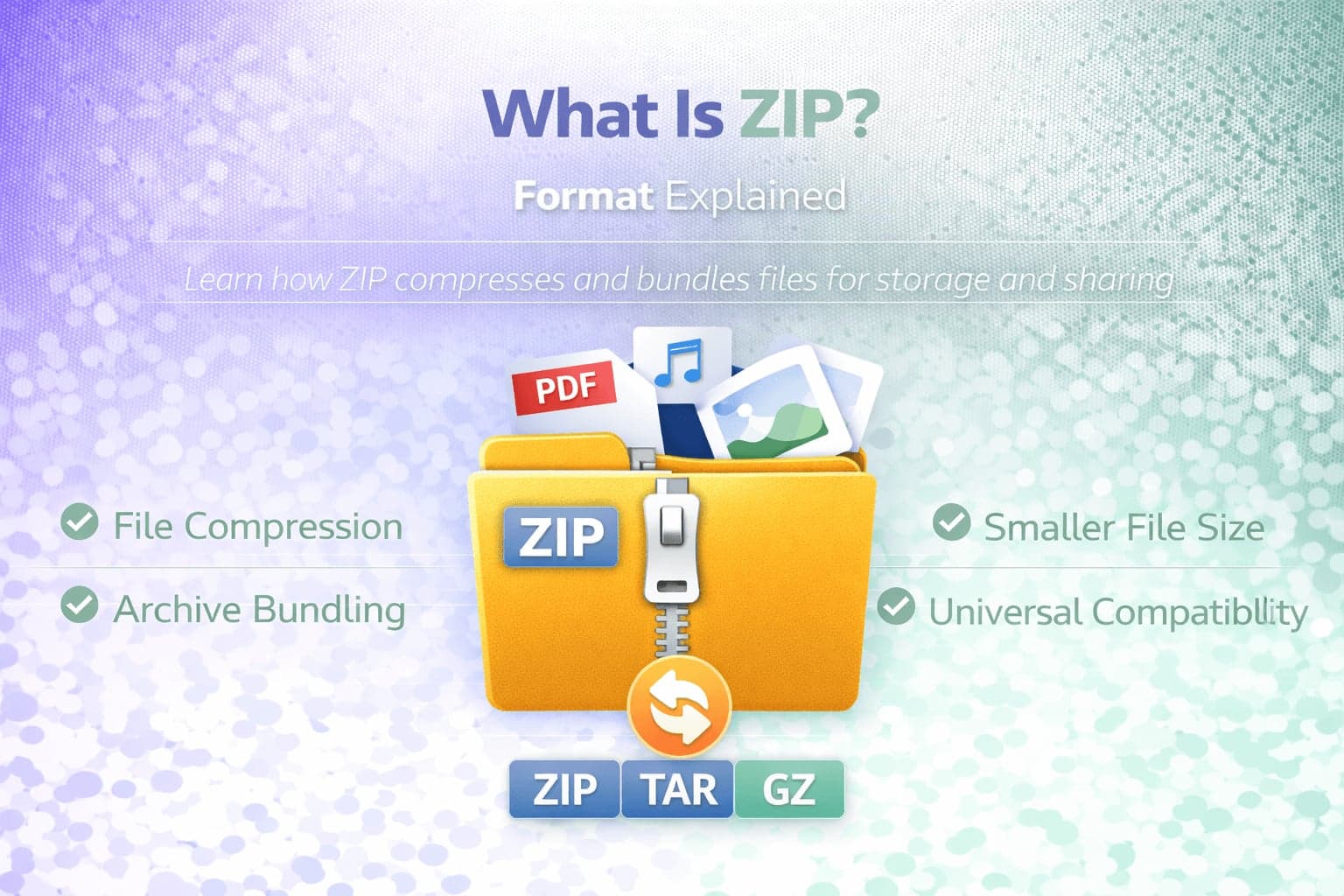
What Is ZIP? Format Explained
ZIP is one of the most widely used archive file formats in the world. It compresses one or more files into a single container, reducing file size and making storage and transfer more efficient. Because of its long-standing adoption across operating systems, ZIP has become a universal standard for file compression and archiving.
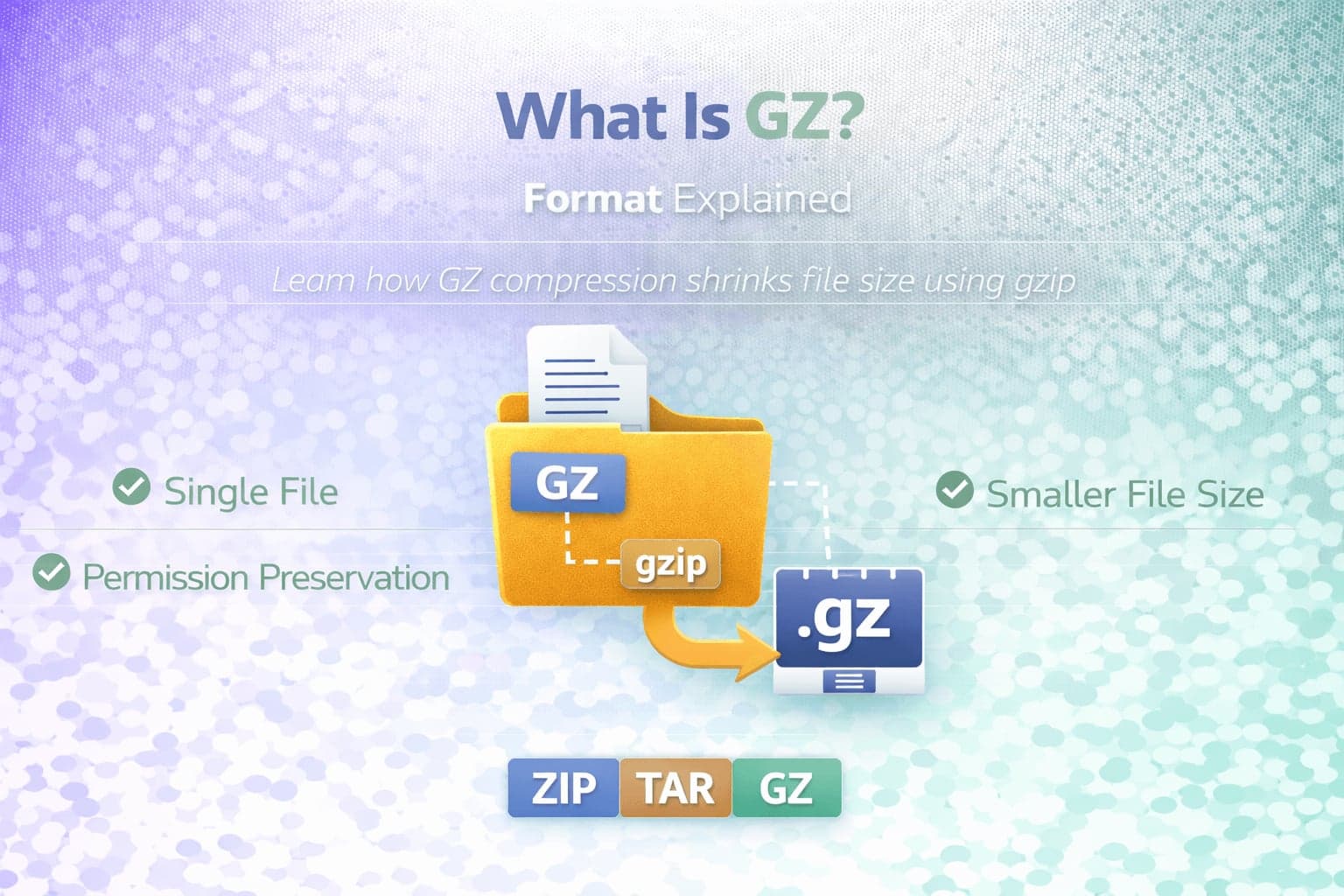
What Is GZ? Format Explained
GZ is a compression format using the gzip algorithm, commonly paired with TAR in Unix and Linux environments. Learn how it works and how it differs from ZIP and TAR.
What Is TAR? Format Explained
TAR is an archive format used in Unix and Linux systems to bundle files while preserving permissions and structure. Learn how it works and how it differs from ZIP and GZ.
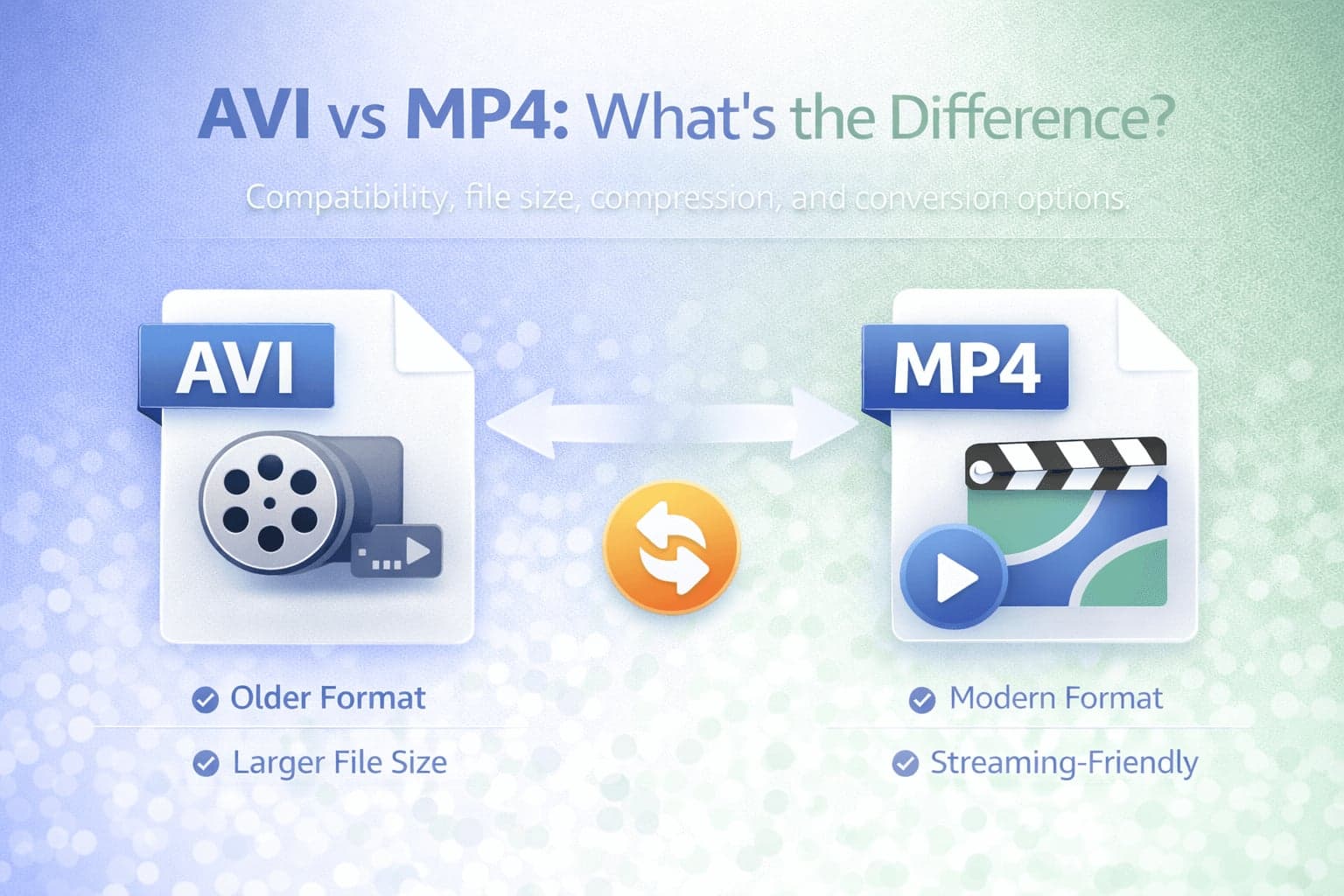
AVI vs MP4: What's the Difference?
When working with video files, two formats that frequently appear are AVI and MP4. They differ significantly in structure, compression efficiency, compatibility, and practical use cases. Understanding the difference helps clarify why one format may produce larger files and why conversion is sometimes necessary.
How to Open HEIC Files on Windows (and Convert Them to JPG)
iPhone photos saved as HEIC often refuse to open on a Windows PC. Here are three reliable ways to view them on Windows 10 and 11 — and the simplest way to convert HEIC to JPG for guaranteed compatibility.
How to Open an EPUB File on Windows, Mac, and Phone
EPUB is the most common ebook format, yet many devices have no built-in way to open it. Here is how to read EPUB files on Windows, Mac, iPhone, Android, and Kindle — and how to convert EPUB to PDF when you need a copy that opens everywhere.