Blog
Insights & Guides
Tips, format explainers, and how-to guides to help you work with files faster.
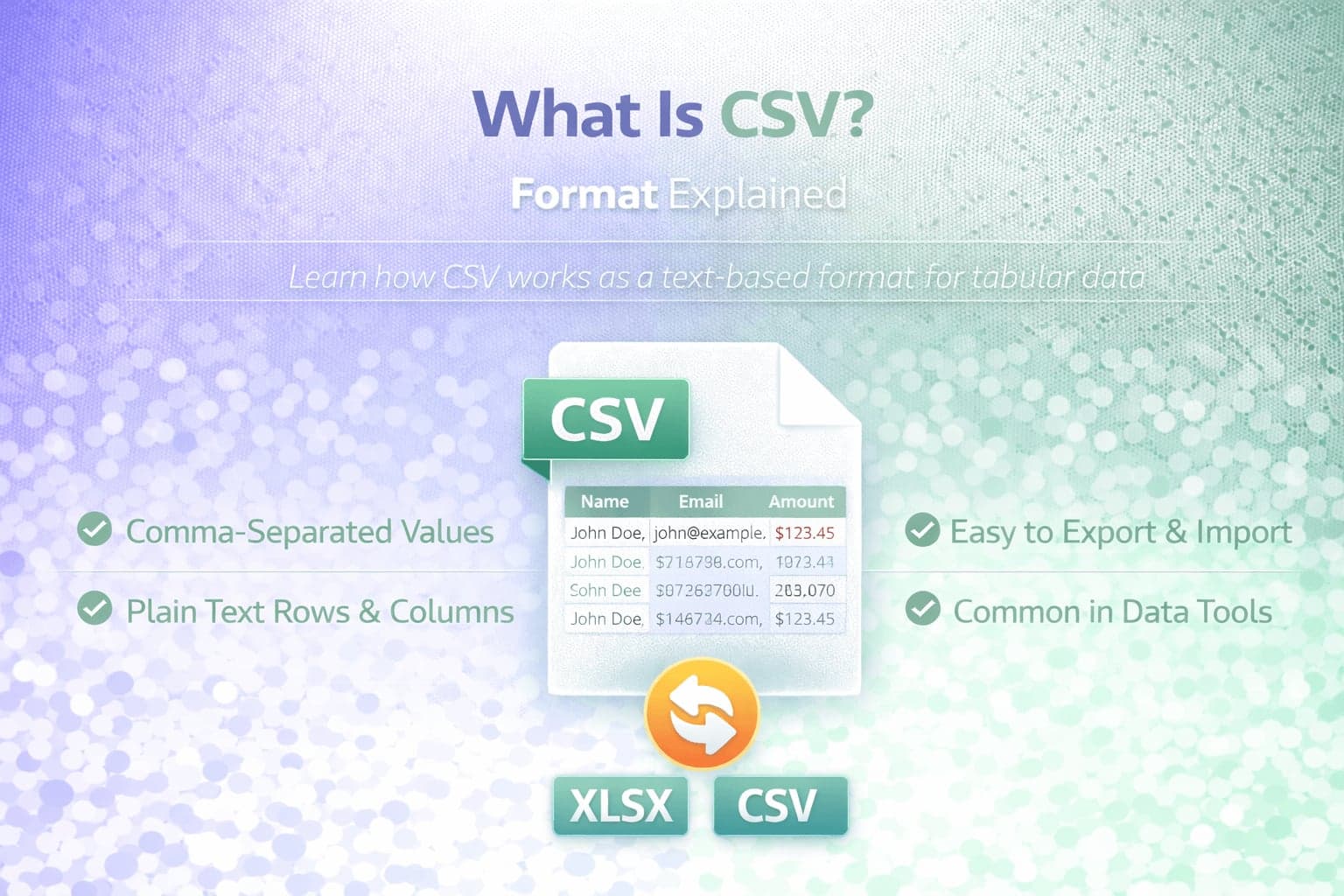
What Is CSV? Format Explained
CSV is one of the most common file formats used to store and transfer tabular data. Used everywhere from CRM exports to ecommerce reports, CSV is lightweight and universally supported. Understanding how it works helps prevent common issues like broken columns, wrong separators, and corrupted special characters.
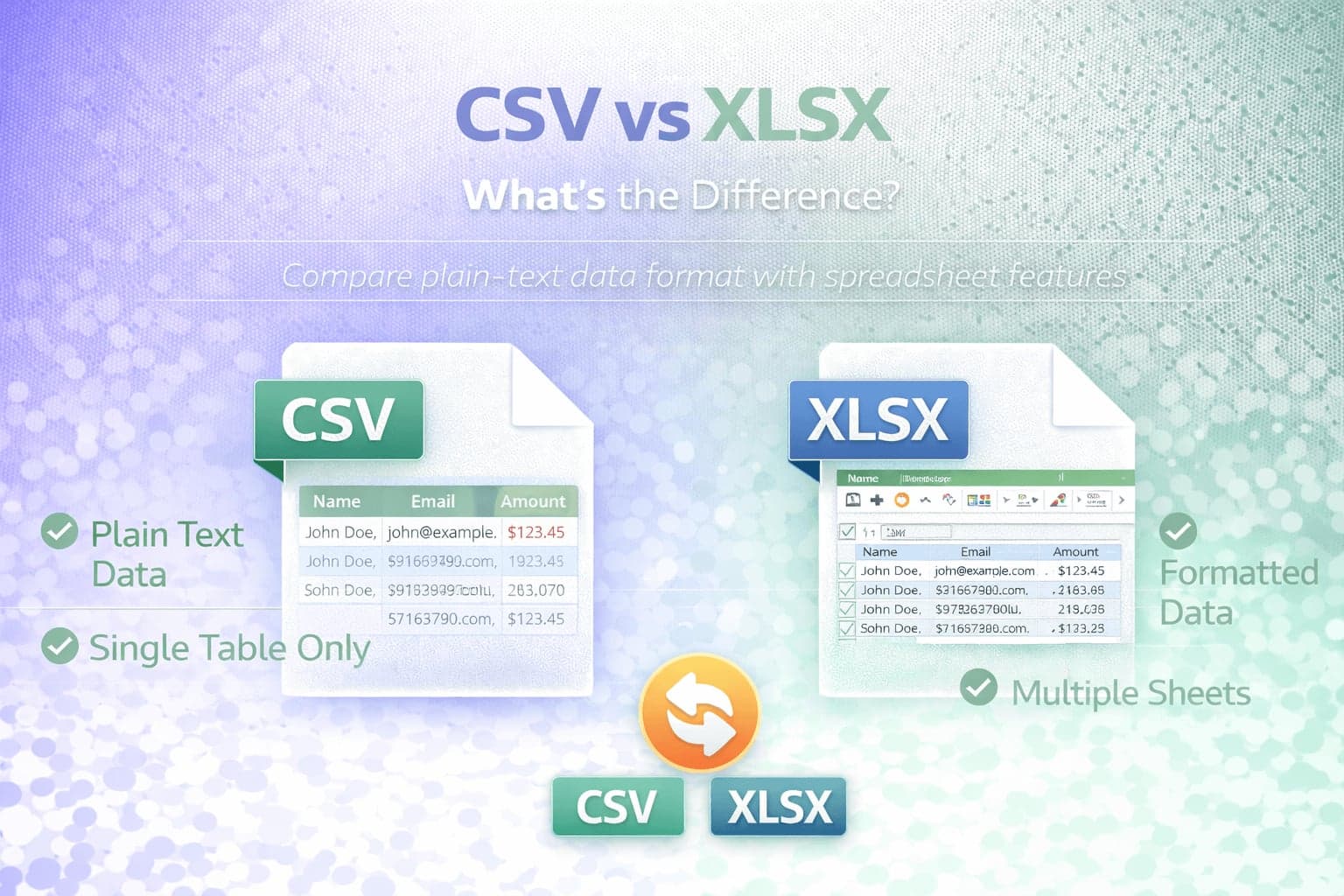
CSV vs XLSX: What's the Difference?
CSV and XLSX are two of the most commonly used formats for storing tabular data. Although both can open in spreadsheet programs and display rows and columns, their structure, capabilities, and ideal use cases are fundamentally different — and mixing them up can lead to formatting loss, broken imports, and missing sheets.
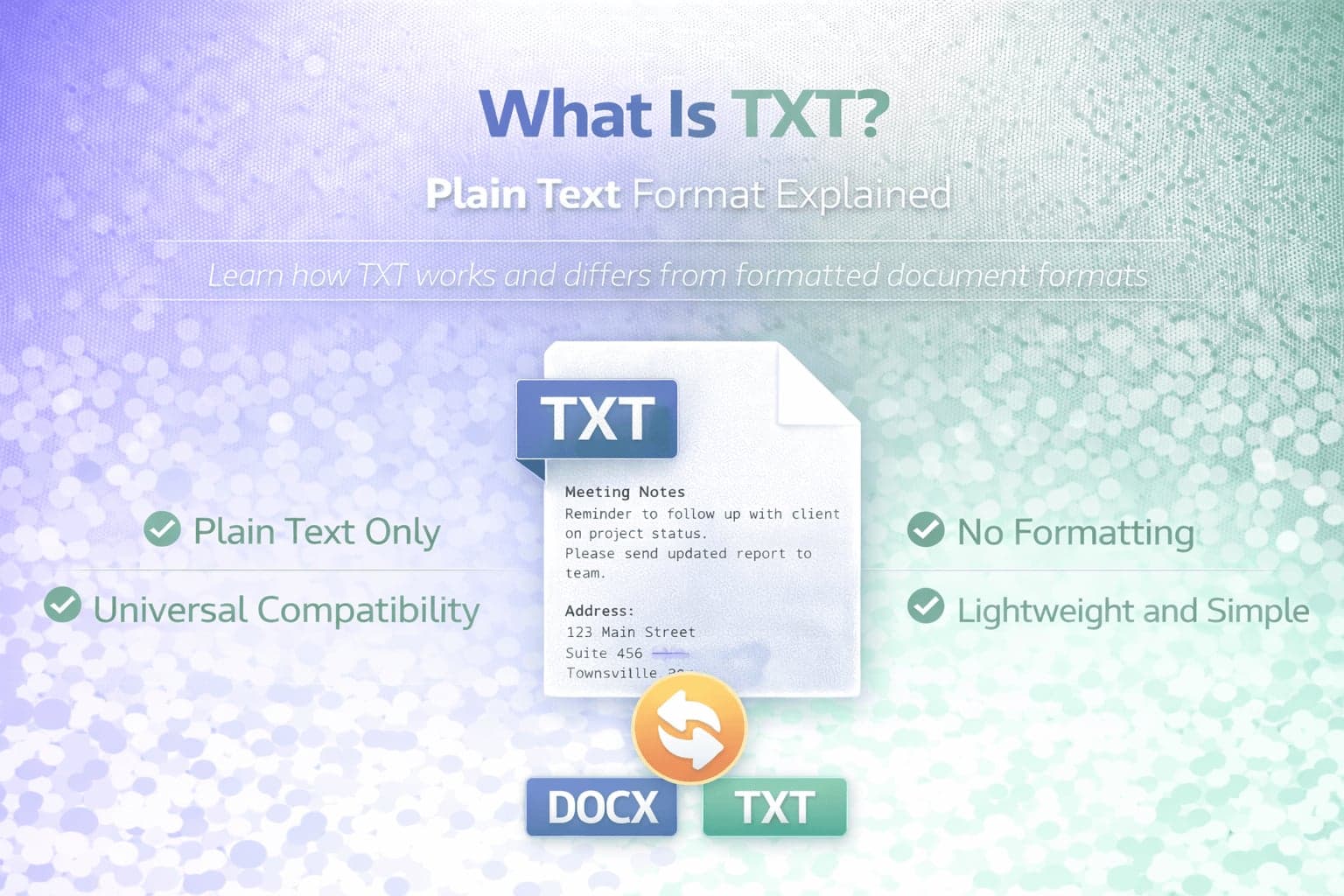
What Is TXT? Plain Text Format Explained
TXT is one of the simplest and most universal file formats in computing. It stores unformatted text using a basic character encoding system — no styling, images, or layout. Despite its simplicity, TXT plays a crucial role in software development, data exchange, documentation, and long-term digital storage.
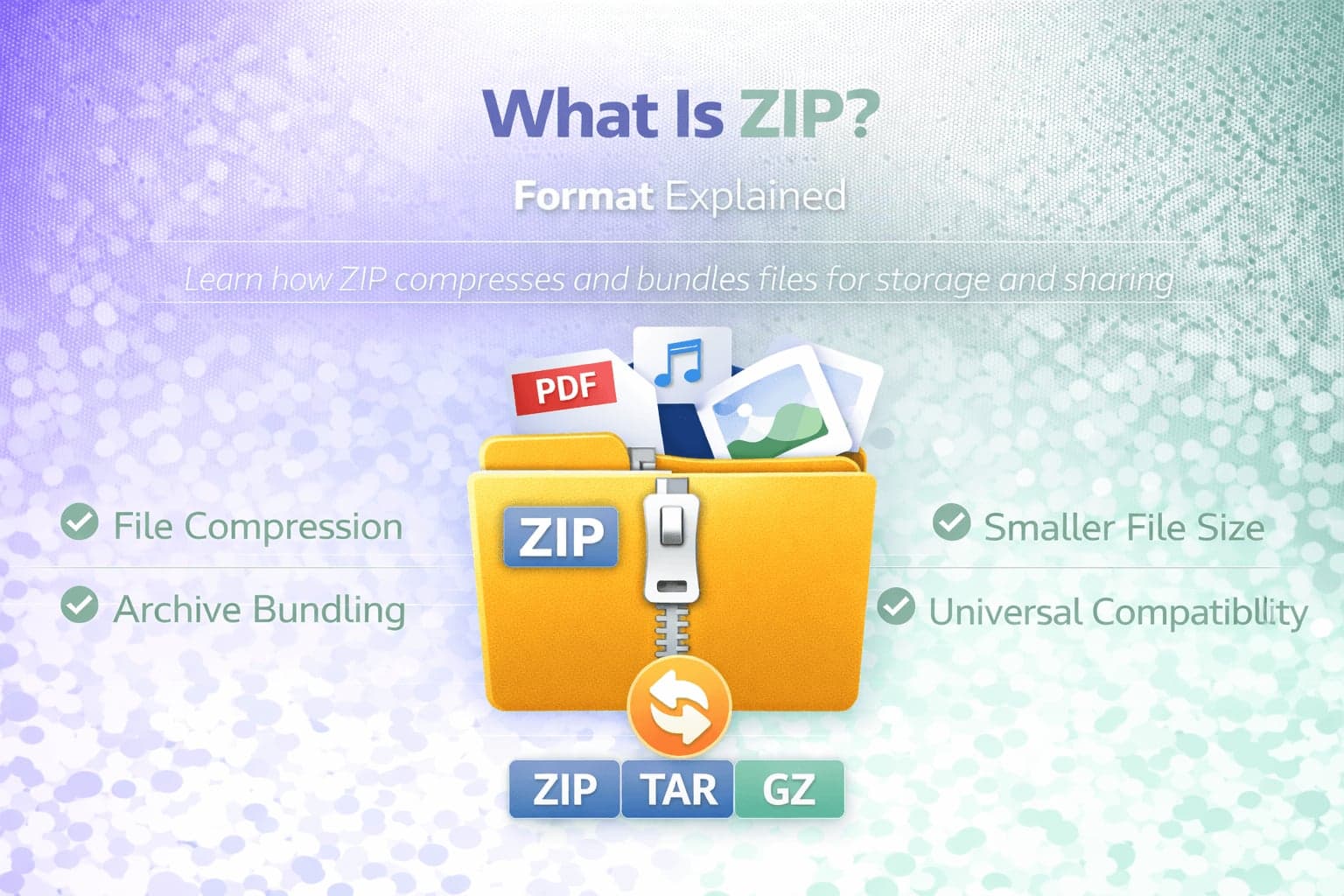
What Is ZIP? Format Explained
ZIP is one of the most widely used archive file formats in the world. It compresses one or more files into a single container, reducing file size and making storage and transfer more efficient. Because of its long-standing adoption across operating systems, ZIP has become a universal standard for file compression and archiving.
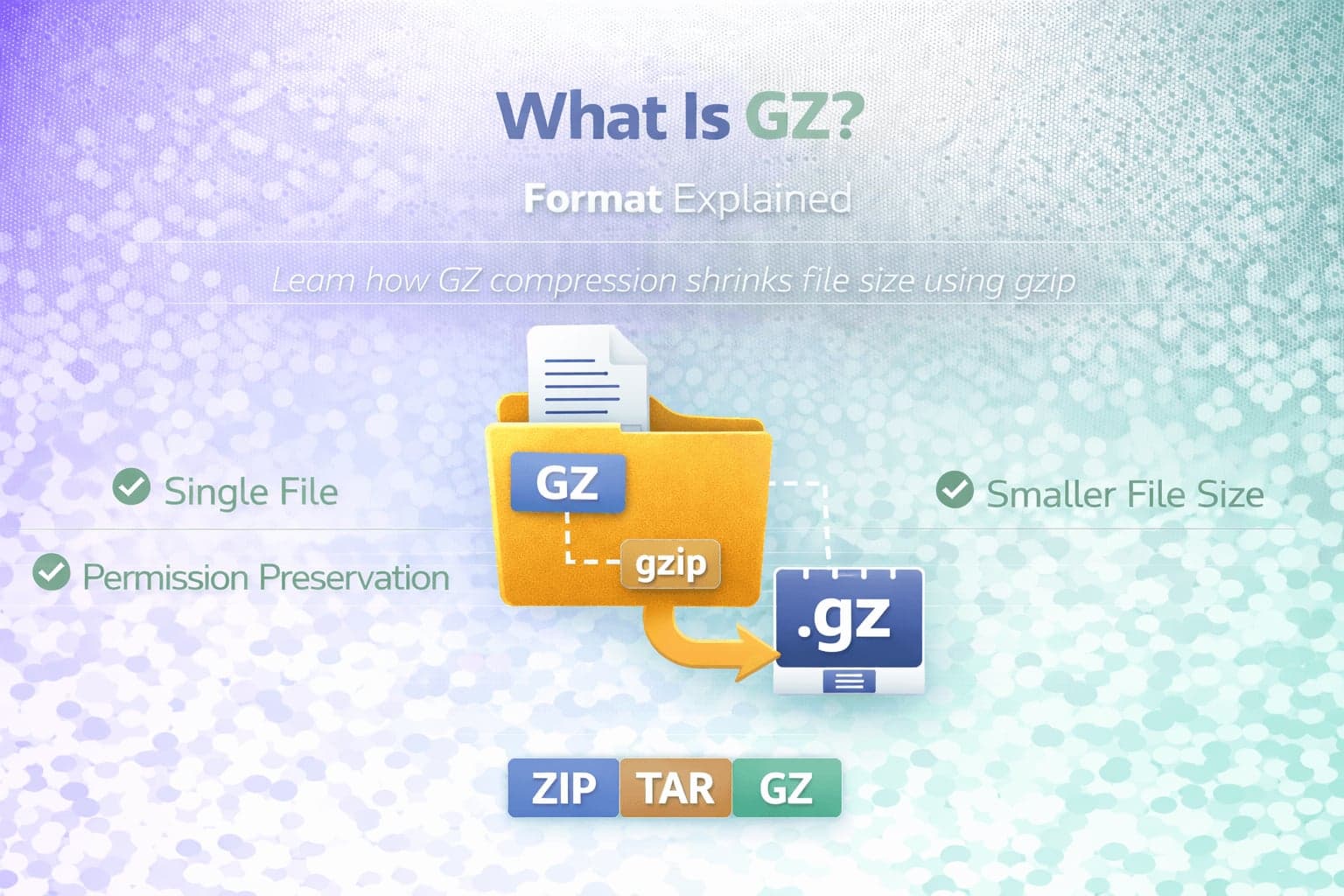
What Is GZ? Format Explained
GZ is a compression format using the gzip algorithm, commonly paired with TAR in Unix and Linux environments. Learn how it works and how it differs from ZIP and TAR.